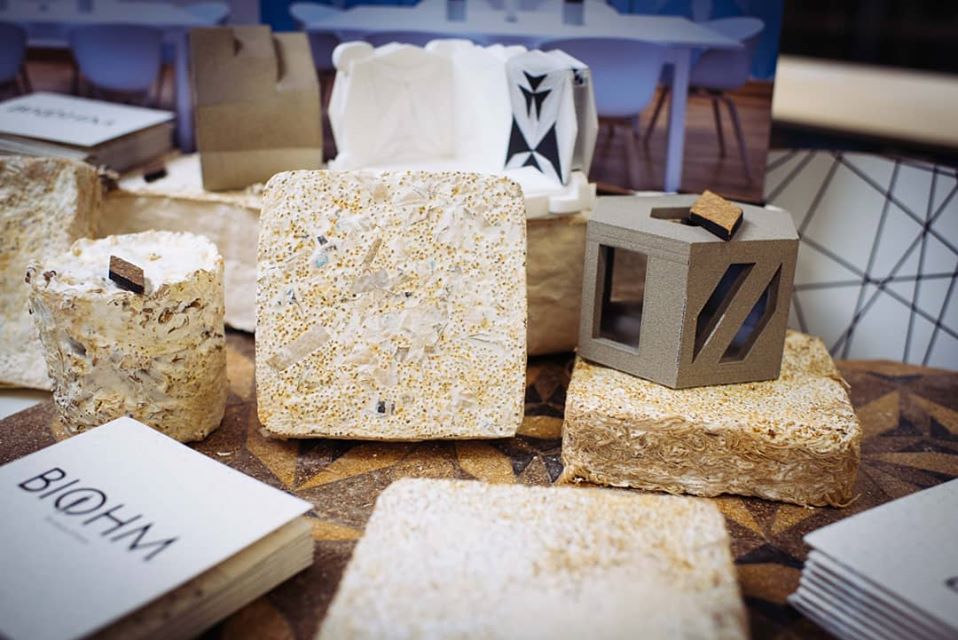
The circle of it: This company grows building insulation and construction materials from mycelium — the root network of mushrooms — fed on food and agricultural waste, creating carbon-negative, fully biodegradable alternatives to petrochemical construction materials.
BIOHM
Summary
Biohm is a London-based biomaterials company developing regenerative construction products by applying biomimicry — designing systems that mirror nature’s own circular logic, where nothing is wasted and everything becomes food for new life. Its flagship product, Terraphyll, is described as the world’s first scalable mycelium insulation platform: carbon negative at -25 kg CO₂ eq/m², with an A+ indoor air quality rating, no toxic VOCs, and a fire safety rating of B untreated. A second product, ORB (Organic Refuse Biocompound), is a 100% biodegradable sheet material made from food and agricultural waste that replaces manufactured wood-based panels in construction. All products are designed to be cold composted at end of life or fed back into Biohm’s own biomanufacturing processes. The company works with over 300 different strains of mycelium and uses an AI-powered platform to adapt its materials across building, automotive, and aerospace applications. (Source)
Story
Biohm was founded in 2016 by Ehab Sayed, a designer, engineer, and researcher who was struck by the scale of waste generated by the construction industry and set out to apply nature’s own logic to fix it. Sayed observed that mycelium’s fibrous underground network is structurally similar to engineered plastic insulation — but without the toxicity, the petrochemicals, or the end-of-life pollution problem. The company has since grown into a multidisciplinary team of scientists, designers, and engineers, and has been recognised as a 2021 winner of the Index Award for social impact design and as part of the World Economic Forum’s Circulars Accelerator cohort. Its manufacturing facility, Biomill Watchet, is being established in partnership with a community social enterprise, with profits shared with the local community — embedding social justice into the business model from the ground up. (Source) (Source)
Pic credit: Biohm
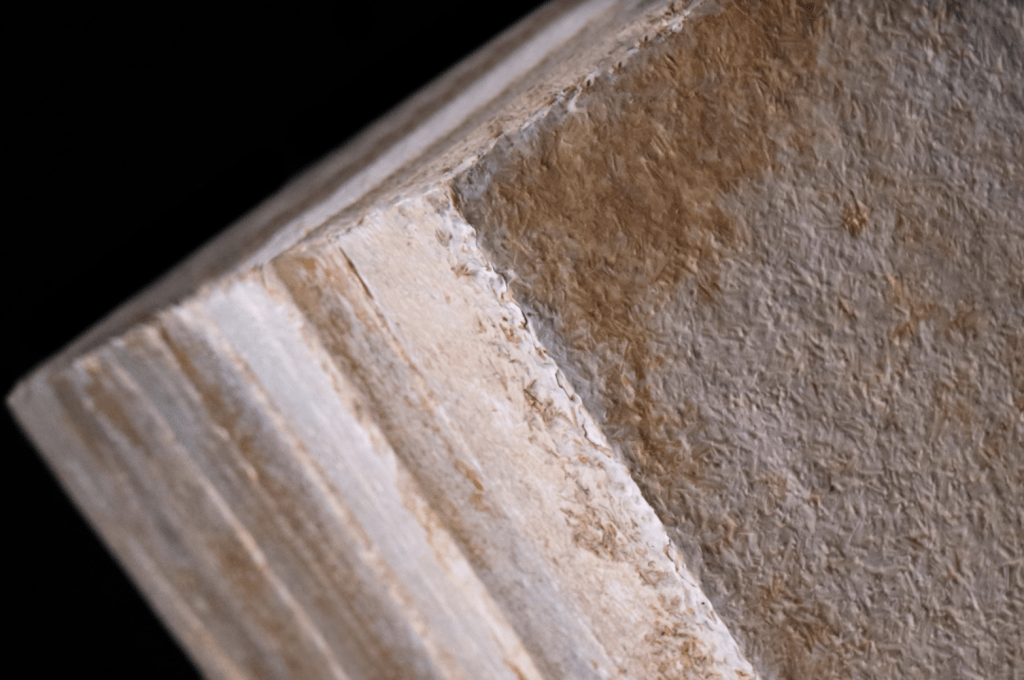
“Mycelium is usually found in forests, underground, and it holds the topsoil together. It allows plants to connect to one another — it’s like nature’s Internet. And we grow that into an insulation panel that can provide superior insulation values compared to other alternatives on the market.“
Ehab Sayed, Founder, Biohm, via World Economic Forum
Founder(s)
Ehab Sayed
Headquarters
London, UK
In business since
2016
Technology
Mycelium grown on agricultural and industrial waste, formed into carbon-negative insulation panels (Terraphyll) and biodegradable sheet materials (ORB); feedstock-agnostic and AI-optimised across building, automotive, and aerospace applications
Impact
Carbon negative at -25 kg CO₂ eq/m²; replaces petrochemical foam insulation and wood-based sheet materials; fully biodegradable at end of life; A+ indoor air quality; no toxic VOCs or flame-spread compounds; uses food and agricultural waste as feedstock
Business type
For Profit
Website

Leave a comment