

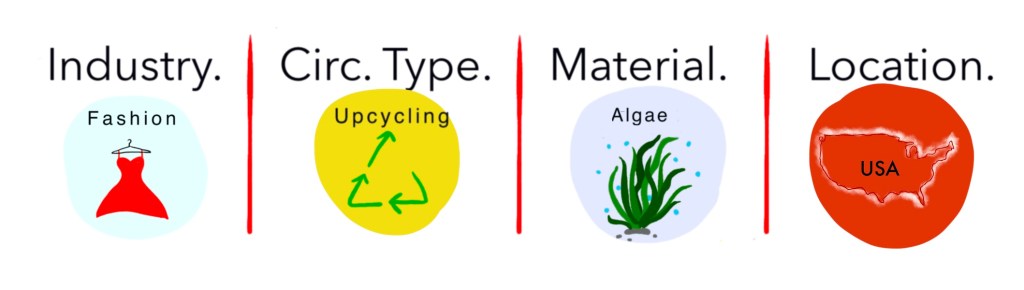
The circle of it: This company has developed seaweed-based fiber materials to be used in the fashion industry.
KEEL LABS
Summary
Keel Labs, formerly known as AlgiKnit, is a bio-materials science company developing sustainable, ocean-derived alternatives to traditional textile fibers. Many traditional derived textiles tend to have plastics and other toxins that are polluting and unsustainable for the planet. Their flagship product is Kelsun®, is a fiber made from biopolymers extracted from seaweed. Designed as a low-impact alternative to conventional materials like cotton or synthetics, Kelsun requires no arable land, pesticides, or harmful chemicals in its production—making it a scalable solution for reducing fashion’s environmental footprint. (Source) The company has since made significant strides, including opening a new facility in North Carolina to scale up production. Alongside these developments, Keel Labs has received backing from investors such as SOSV and has been featured in sustainability innovation circles globally. Its team has also grown to include experts in materials science, marine biology, and business operations. (Source)
Story
Keel Labs was originally founded in 2017 by Tessa Callaghan and Aleks Gosiewski while they were students at the Fashion Institute of Technology, Their collaboration started as a student project focused on transforming seaweed into textile fibers, which quickly gained momentum and evolved into the startup AlgiKnit, later rebranded as Keel Labs. (Source)
Pic credit: Material Factors(right) and SOSV (top)

” [W]hen people typically talk about natural materials, it sounds like it’s the solution in that, “oh great, it avoids all of those things (micro-plastics) and it’s natural” and that’s fantastic, but what’s really underneath the surface there is there’s mass amounts of water usage, there’s mass pesticide fertilizers required, arable land degradation in a lot of cases, and a lot of chemical processing post cultivation. And so when we kind of look at the industry on a holistic level, it’s not just carbon emissions and microplastics, it’s chemicals, it’s land, it’s water, and so rather than saying we’re just going to be able to compare and say, we’re not using microplastics, how do we actually solve the underlying challenges of the industry as a whole?”
Tessa Callaghan in an interview
Founder(s)
Tessa Callaghan and Aleks Gosiewski
Headquarters
Morrisville, North Carolina
In business since
2017
Technology
Creating a sustainable textile from seaweed
Impact

Leave a comment