
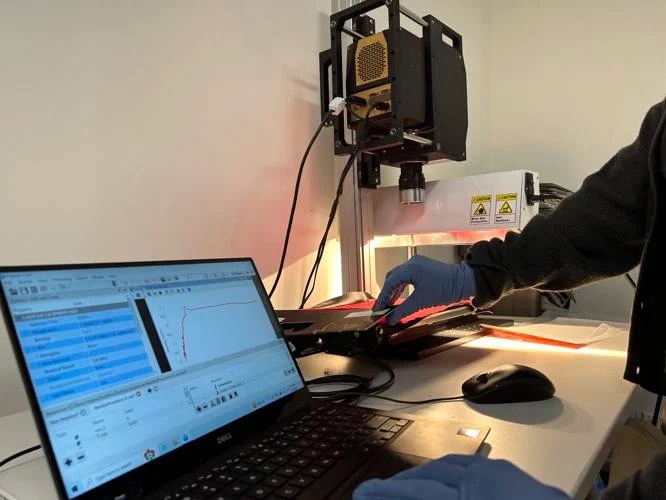

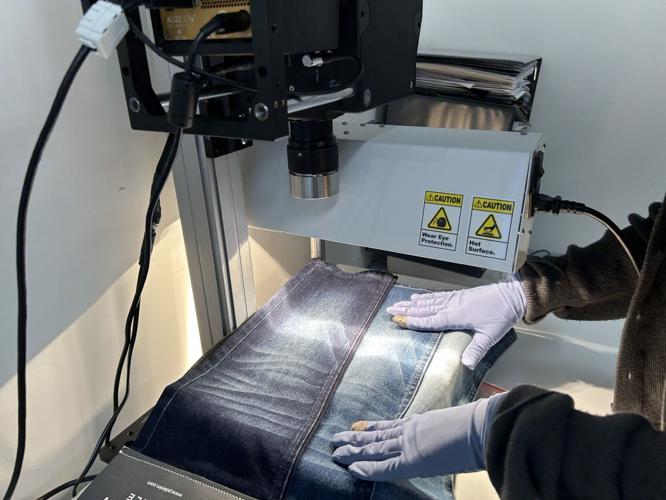
The circle of it: This company utilizes artificial intelligence (AI) and hyperspectral imaging to sort discarded textiles for recycling.
refiberd
Summary
Refiberd is tackling the problem of the textile waste crisis, but is approaching the problem by focusing on textile sorting. Textile recycling processes typically require a well sorted supply of textile waste. For example, a system that recycles polyester clothing will fail if even 1% of cotton enters their supply unexpectedly, as the unexpected cotton interferes with the polyester degradation and renders the contaminated polyester unrecyclable. (Source) This is especially problematic since textile waste is largely collected from thrift stores and consumer disposal, which means it is collected as unsorted material. Ultimately, 75% of all textile waste becomes unusable for these recyclers. (Source) To this end, Refiberd’s sorting system first performs a quick presort of textile waste, creating categories assigned by color and estimated material percentage. The waste is then shredded and is further quantified through a spectroscopy and machine learning based algorithm, which results in quantified waste that is over 90% accurate within a 1% material range – a new standard in the textile recycling industry. The waste then enters Refiberd’s chemical recycling system which is able to isolate the cotton and polyester fibers to create new Refiberd thread. (Source) The company has also created technology with the ability to reliably quantify and recycle multilayered textile waste, which historically has been the most challenging material composition to identify.
Story
Founders Sarika Bajaj and Tushita Gupta met while pursuing engineering degrees at Carnegie Mellon University. Bajaj, whose background is in textile research, previously worked at Intel on experimental fashion technology. Gupta is the company’s chief technology officer, with a background in AI. The idea for the technology was spurred by Bajaj’s master’s thesis and with the advancements in technological ability to recycle fabric blends. The pair thought that textile waste sorting was crucial to recycling and founded the company in 2020.
Pic credit: eTextile Communications (right and top)
“We also saw the tremendous impact that Refiberd’s technology could have to enable the future of textile production. By transforming local textile waste into new usable products, Refiberd could enable, for the first time, localized textile production by opening up raw material access, means of production, and local distribution models. Instead of depending on large, complex global supply chains to ship raw materials, Refiberd could allow different countries to use their own waste streams to support their own production industries – a prospect that was very exciting for us from a sustainability perspective and labor market enabler perspective.“
Sarika Bajaj in an interview
Founder(s)
Sarika Bajaj and Tushita Gupta
Headquarters
Cupertino, CA
In business since
2020
Technology
Textile waste sorting using AI and hyperspectral imaging
Impact

Leave a comment