


The circle of it: This company is creating awareness and plastic alternatives with used gum.

Gumdrop
Summary
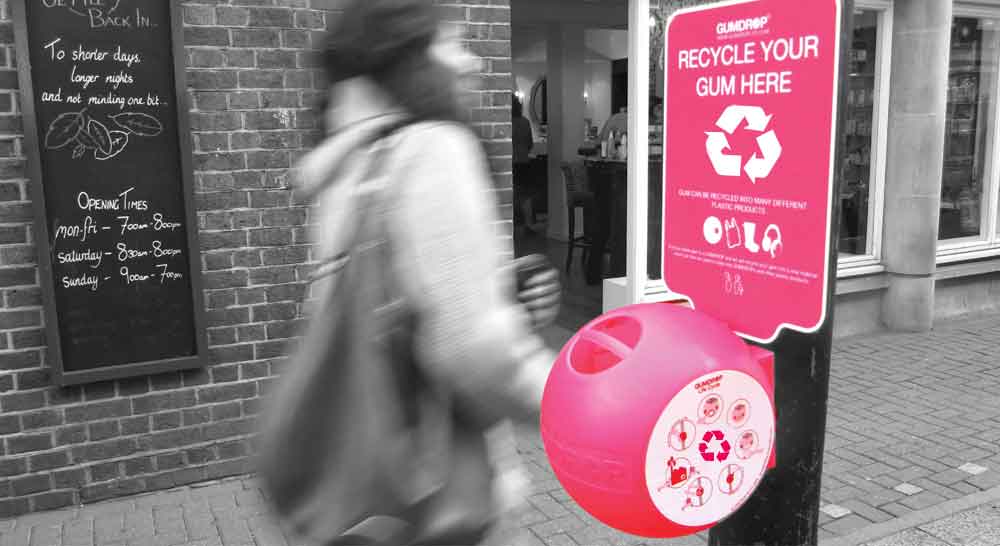
Gumdrop was founded to tackle the problem of chewing gum litter. The company recycles and processes chewing gum into a range of new compounds (Gumtec®) that can be used in the rubber and plastics industries. The company words as a closed loop recycling process. Gumtec® is used to make the Gumdrop bin; these bins can be placed to collect gum from the streets of Amsterdam and other cities, and once it is full, the the contents of the waste gum is recycled and processed to manufacture other Gumdrops, or other products with Gumtec®. In collaborations with other companies, Gumtec® has been used to make many products like sneakers, wellington boots, mobile phone covers, stationary, packaging and much more. A fun collaboration with fashion company Explicit resulted in a shoe made at least in part with recycled gum using the Gumtec® technology.
Story
Gumdrop was started by Founder Anna Bullus to tackle the problem of chewing gum litter on the streets of various cities. The company started the Gumdrop bin in 2010, in 2011 offered free trials to anyone with a gum litter problem in the U.K. One of their first customers was Legoland who accepted installations of Gumdrop in their theme park.
Pic Credit: Atlas of the Future (right) and Wevolver (top)
“One of the litters I found was a piece of chewing gum and, as a designer, I was amazed there was nothing being done to recycle it “
Anna Bullus in an interview
Founder(s)
Anna Bullus
Headquarters
London, UK
In business since
2009
Business type
for profit
Impact
600 locations installed as of 2018
Technology
creating a material Gumtec from chewing gum, creating awareness about chewing gum litter, creating demand for a new type of product
Material
chewing gum
Website

Leave a comment