
The circle of it: This company works to encourage Sierra Leone’s citizens to switch from using wood-based charcoal caused by deforestation to a substitute made from coconut scraps.
rugsal
Summary
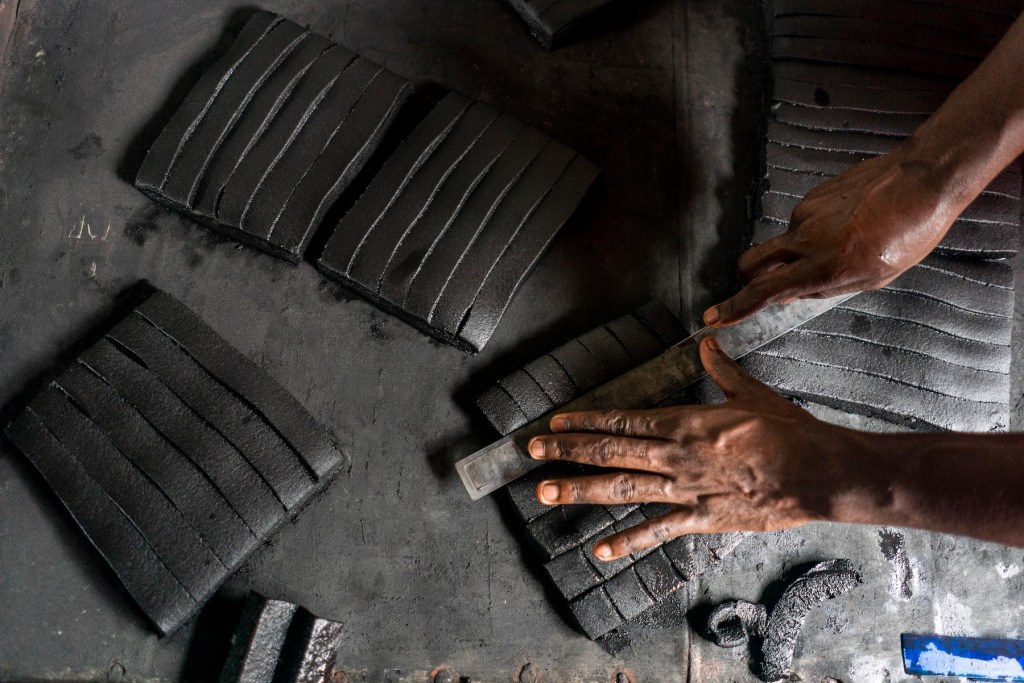
Rugsal uses discarded coconuts from juice vendors around Freetown, Sierra Leone, to produce coconut briquettes, which, studies show, burn longer for families who do most of their cooking on small outdoor stoves. According to reports, a ton of charcoal look-alikes fashioned from natural waste was equivalent to sparing up to 88 trees with 10-centimeter trunks. Because the company uses discarded coconuts from another industry (food, juice), this endeavor requires no chopping and leverages a waste resource as raw material for creating the coconut briquettes. Charcoal is still used as the top cooking fuel in Sierra Leone, a nation where electricity is often unreliable. This is an important effort because this provides a better energy source than charcoal, gained through tree felling, which caused a lot of deforestation in Sierra Leone. Deforestation not only releases more carbon dioxide into the atmosphere — it weakens slopes and caused mudslides. As of December 2021, Rugsal Trading has produced roughly 100 tons of coconut briquettes, which, studies show, burn longer for families who do most of their cooking on small outdoor stoves. One report in the Philippines found that a ton of charcoal look-alikes fashioned from natural waste was equivalent to sparing up to 88 trees with 10-centimetre trunks. (Source) More information about how the briquettes are made can be found here.
Story
Founder Alhaji Siraj Bah was personally affected by a devastating landslide that killed members of his adopted family with whom he was living with. Bah put his efforts figuring out solutions to curb deforestation and came across a Youtube video of a man in Indonesia talked about coconut briquettes as a fuel source. Over the next few years, Bah put together the capital to buy the machine to make the briquettes and founded the company. (Source) Since founding the company, the United Nations named him a “Young Champions of the Earth” finalist in 2019. He received an invitation the following year to pitch at a start-up conference at Harvard Business School, where he won a $5,000 prize.
Pic Credit: Washington Post
“I could make fuel with stuff we find on the street.”
Alhaji Siraj Bah in an interview
Founder(s)
Alhaji Siraj Bah
Headquarters
Freetown, Sierra Leone
In business since
2018
Business type
for profit
Impact
Technology
sourcing coconut waste, making briquettes to be used a fuiel source from coconut waste
Material
coconut waste

Leave a comment