
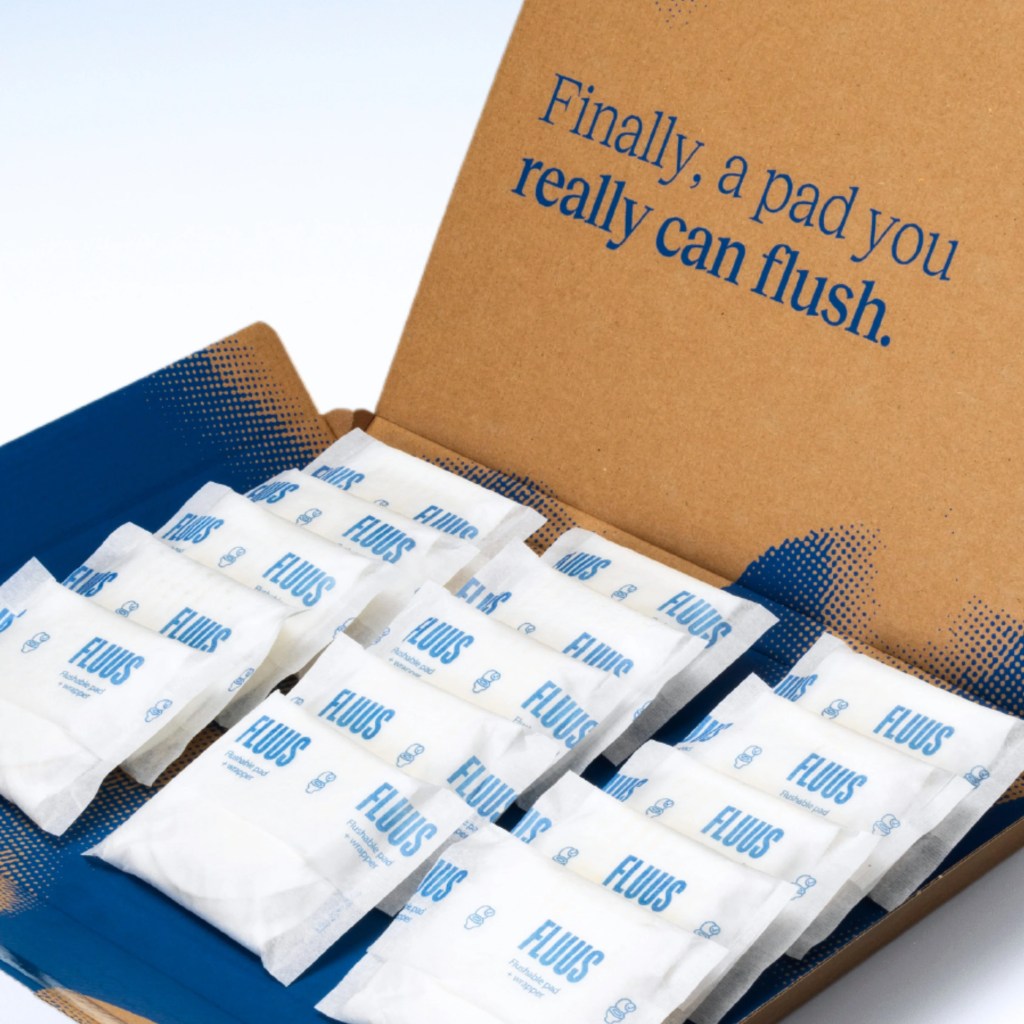

The circle of it: This company is creating zero-waste and plastic-free flushable sanitary pads, thereby keeping them out of landfills.

fluus
Summary
Fluus is attempting to reduce and hopefully eliminate sanitary pads ending up in landfills. Most current products are made of and wrapped in plastic, do not biodegrade or compost, and end up landfills. Fluus estimates that a single menstrautor will use up to 15,000 pads and tampons in a lifetime. In contrast, the company’s sanitary pads are certified flushable, microplastics-free, and glue-free, made of non-woven natural materials. Fluus pads are made with Flushtec, a patent-pending microplastic free biodegradable technology. Crucially, the pads are designed to break down through flushing; the hydraulic motion of the water in a toilet breaks down the fabric in the pad. By six hours, over 80% of the pad will have dissolved or broken down into plant fibres the size of an eyelash. By the time the pad reaches the water treatment center, it can safely pass through the screens where it is then treated and regenerated into biogas and fertiliser.
Story
Co-founders Olivia Ahn and Aaron Koshy met in college at the Imperial College of London, and soon after started developing a prototype of the flushable pad after bonding on their shared frustration over this problem. Over the next five years, they tested many prototypes and finally launched their product in 2023. In 2019, they were certified flushable by the Water Research Centre in England.
Pic Credit: Fluus (right and top)

“We believe that it is the responsibility of companies to design a product that is high-performing and convenient to dispose of sustainably. That is why we developed our water-dispersible technology to remove permanent waste from your bathroom, starting with flushable pads.”
Olivia Ahn and Aaron Koshy in an interview
Founder(s)
Olivia Ahn and Aaron Koshy
Headquarters
London, England
In business since
2017
Business type
for profit
Impact
Technology
designing flushable sanitary pads
Material
plant fibers, biopolymers
Website

Leave a comment